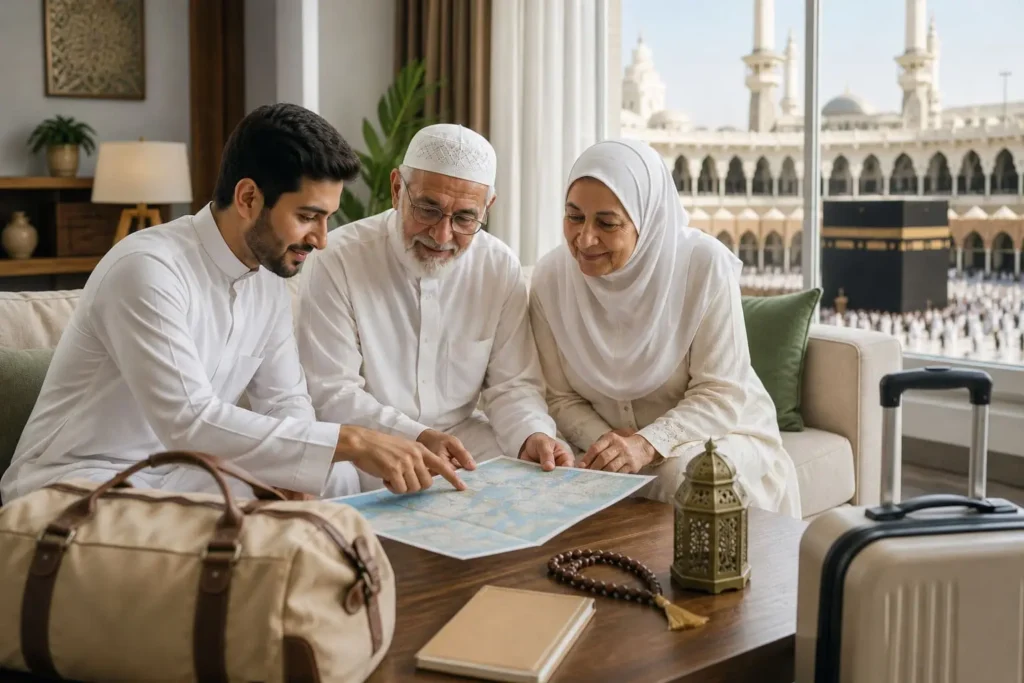
Taking your parents on Umrah is one of the most meaningful things a family can do, and for many older people it is a long-held wish. It also needs more planning than a trip made alone. Getting Umrah with elderly parents right comes down to comfort, pacing and having the practical details settled before you leave.
Talk to Their Doctor First
A check-up before booking is the sensible starting point. Ask the doctor whether long flights, heat, and a lot of walking are safe and whether any medication needs adjusting for the time difference. Bring a printed list of medicines, doses, and conditions, and pack enough for the whole trip plus a few spare days. Keep medication in hand luggage rather than checked bags, so a delayed suitcase never leaves anyone without it.
Choose the Season Carefully
Heat is the main concern for older travelers. Winter and the cooler months make long days at the Haram far easier to manage. Ramadan and school holidays bring the biggest crowds, which can be exhausting and stressful for anyone with limited stamina, so quieter periods are usually kinder to elderly pilgrims. If your dates are fixed by school or work, book early so you still get a hotel close to the mosque.
Hotel Distance Matters More Than Anything
For older parents, a hotel close to the Haram is rarely a luxury. Short walks mean they can rest in the room between prayers, which keeps energy up across several days. Ask for the walking time in minutes, check that the hotel has reliable lifts, and request a ground or lower floor room if stairs are a worry.
Practical Umrah Tips for Senior Citizens
These Umrah tips for senior citizens make a noticeable difference once you arrive. Most can be arranged in advance with a little preparation.
- Use a wheelchair for Tawaf and Sa’i, even for people who can walk short distances. Wheelchairs are available at the Haram, and many families find it saves energy for worship.
- Keep water and light snacks close, dehydration comes on quickly in the heat and in crowded spaces.
- Rest between rituals, there is no rule that Tawaf and Sa’i must be done back to back on the same day.
- Pack comfortable footwear, supportive, easy to slip on and off, and already broken in.
- Keep a card with contact details, including the hotel name and your phone number, in an easy-to-reach pocket.
Plan the Pace Around Their Energy
Do not try to fit everything in. A relaxed itinerary with rest days and a late first morning after arrival works far better than a packed schedule. Choosing quieter times at the Haram, such as the hours after Fajr or late at night, can also make Tawaf more comfortable.
Think About Transport
Long drives and bus waits are harder on older travelers. A private car for the airport transfer and for the Makkah to Madinah journey, which takes roughly four to five hours by road, removes a lot of strain. Overnight transfers suit some families, while others prefer a daytime drive with stops for rest and prayer.
Look After the Caregiver Too
If you are the one organizing everything, build in time to rest yourself. Splitting responsibilities with siblings or relatives on the trip and agreeing on a simple plan for what to do if someone gets separated makes the days calmer for everyone.
Be Patient With the Process
Things will move more slowly than planned, and that is fine. Many families say the unhurried pace becomes the best part, giving their parents time to pray quietly and take in each moment without feeling rushed.
iLinkTours designs senior citizen Umrah packages for families traveling with older relatives, with hotels close to the Haram, private transfers, and relaxed itineraries, so the journey stays comfortable from the first day to the last.