Getting from the US to Saudi Arabia usually means a routing decision more than a straightforward search, since direct options are limited and most itineraries involve at least one stop. A bit of planning around flights from USA to Saudi Arabia makes a real difference in both cost and how worn out you feel on arrival.
The One True Nonstop Option
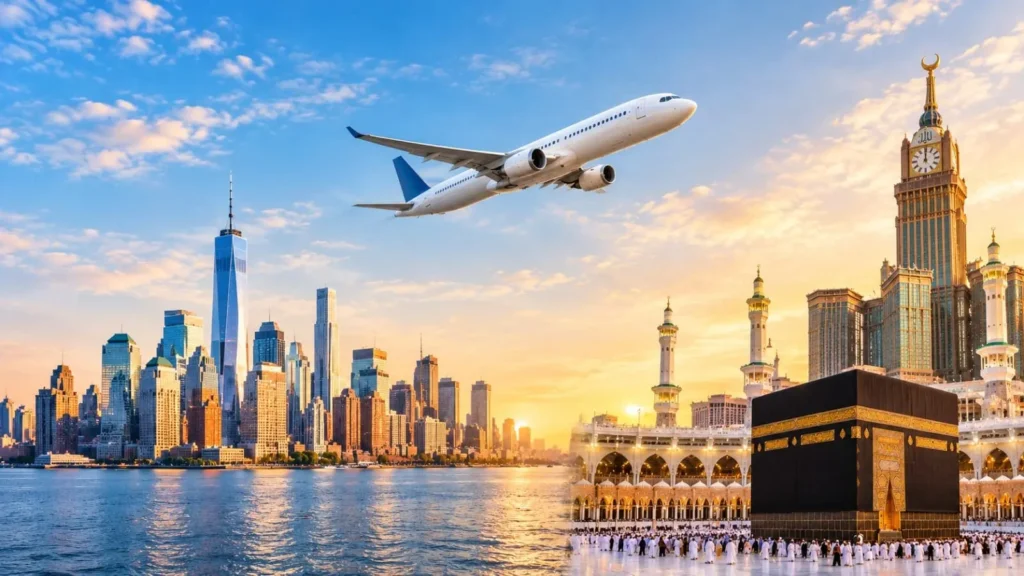
Saudia operates a nonstop route between New York’s JFK and Jeddah, the only genuinely direct link between the two countries from a major US airport. Everything else involves a connection, commonly through Istanbul, Doha, Dubai, or a European hub such as Frankfurt or London, adding anywhere from two to six extra hours depending on the layover. Travelers outside the New York area will almost always need at least one domestic or international connection to reach this nonstop service.
Choosing Your Connection Wisely
Not all layovers are equal. A well-timed connection through Doha or Istanbul often adds only a couple of hours to the total journey, while a poorly matched one can turn what should be a fourteen-hour trip into something closer to twenty-two. It’s worth checking the layover length carefully rather than booking on price alone, since a cheaper fare with a nine-hour layover isn’t always the better deal.
Getting to Jeddah From the USA Specifically
Most Umrah travelers are specifically looking for flights to Jeddah from USA departures, since Jeddah is the main gateway for pilgrims. Turkish Airlines, Qatar Airways, and Emirates all run reliable connecting routes into Jeddah, and comparing total travel time across a few options usually reveals a meaningfully better routing than the first result a search turns up.
Which US Cities Have the Most Options
New York, Washington DC, Chicago, and Los Angeles tend to offer the widest range of connections, since more international carriers serve these hubs with onward routes into Saudi Arabia. Travelers flying from smaller cities usually connect domestically first, which is worth factoring into how much buffer time to leave for the international leg.
Timing Your Booking Around Peak Season
Fares climb noticeably in the weeks before Ramadan and during the months surrounding Hajj, when demand from pilgrims spikes across every airline serving the route. Booking three to four months ahead of either season tends to lock in meaningfully better pricing than waiting until a few weeks before departure.
What to Have Ready Before You Fly
- A confirmed Umrah visa or eVisa, registered through Nusuk before travel, whichever route you’re using.
- Proof of a meningitis ACWY vaccination, required for entry and needs administering at least ten days before departure.
- A passport valid at least six months beyond your travel dates, checked well before booking, not at the airport.
- Confirmed accommodation details, sometimes requested as part of visa or check-in verification.
What Happens at Check-In
Airlines flying into Jeddah for Umrah season typically verify visa and vaccination documents at check-in rather than leaving it entirely to immigration on arrival. Having digital and printed copies of everything ready avoids a delay at the counter, particularly during busier periods when staff are processing a high volume of pilgrim travelers.
Making the Long Journey More Manageable
Most routes run between fourteen and twenty-two hours depending on the connection. Choosing an overnight departure where possible helps with adjusting to Saudi Arabia’s time zone faster, and leaving at least ninety minutes of buffer at the connection avoids a stressful sprint between gates if the first leg runs late.
iLinkTours compares routes and fares across the major carriers flying from the US to Saudi Arabia, factoring in your preferred layover city and travel dates so the flight itself is one less thing to plan before an Umrah trip.