Understanding Muslim Funeral Rites and Prayers
كُلُّ نَفۡسٖ ذَآئِقَةُ ٱلۡمَوۡتِ
Translation: Every soul will taste death. (Surah Al-Anbya – 35)
This ayah emphasizes purity, humility, and equality, that life is temporary, and all souls, no matter how rich, poor, powerful, or strong they are, will return to Allah. Islam reminds us of this truth and teaches us how to face it with faith.
So, when a believer passes away, it is the duty of those left behind to honor the departed soul in a manner Allah has prescribed, by offering a funeral.
In this blog, we will look at why Muslims perform funerals and what steps are followed according to Islamic teachings.
Why Do Muslims Perform Funerals?
The funeral serves two important purposes: to help the deceased transition with honor and to remind the living of their own responsibilities toward Allah.
Performing the funeral is also a way for the community to come together in faith. It gives family and friends a chance to pray for the deceased, seek forgiveness for them, and show love and respect one last time.
Islamic funeral rites and traditions
The entire process, from preparing the body to burial, must be done carefully and sincerely, following the Islamic funeral rites and traditions:
Washing and Shrouding the Body (Ghusl and Kafan)
The first step of a Muslims funeral is the ritual washing, known as Ghusl. Close family members of the same gender wash the body with clean water, symbolizing spiritual purification. The washing is done with care, modesty, and prayers for forgiveness.
Once washed, the body is wrapped in a plain white cloth called Kafan. Men are usually wrapped in three pieces of cloth, while women are wrapped in five. The simplicity of the shroud reflects equality; in death, all Muslims are the same before Allah, regardless of wealth or status.
This act also follows the tradition of Prophet Muhammad (peace be upon him), making it a key part of Islamic funeral rites and traditions.
The Funeral Prayer (Salat al-Janazah)
After preparation, the community gathers to perform Salat al-Janazah, or the funeral prayer. This prayer is one of the most important elements of a Muslims funeral. It is performed in congregation, emphasizing unity and compassion within the Muslim community.
Unlike other prayers, Salat al-Janazah has no physical prostration. Instead, it focuses on supplication, asking Allah to forgive the deceased, have mercy, and grant them peace. The prayer also reminds the living to prepare their own hearts for the hereafter. It’s a solemn yet hopeful expression of faith and love.
The Burial Process
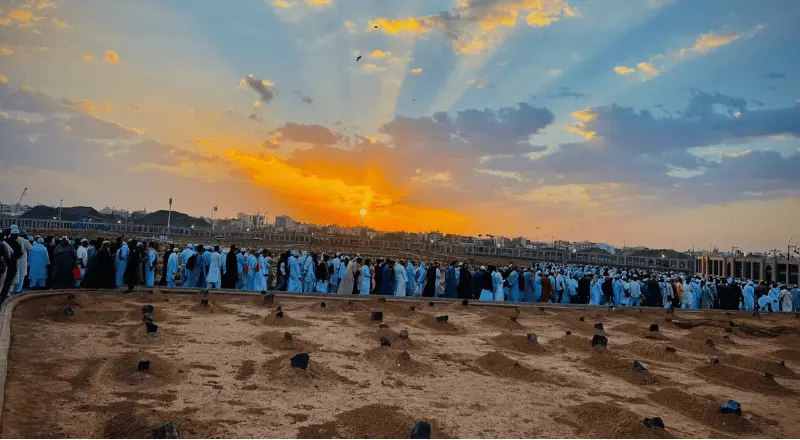
Right after the funeral prayer, the body is taken to the cemetery for burial. In alignment with Islamic funeral rites and traditions, the body is placed in the grave on its right side, facing the direction of Mecca (Qibla). This position is a sign of respect and devotion, consistent with how Muslims pray in life.
The grave is kept simple, without decorative structures. A small marker may be placed for identification, but the focus remains on humility. Family members and friends may throw handfuls of soil into the grave, symbolizing the final return to the earth. This moment is emotional yet filled with faith, as Muslims believe the soul has now moved on to its eternal journey.
Mourning and Remembrance
Islam encourages patience and prayer during mourning. While grief is natural, it should be expressed with dignity and trust in Allah’s will. The mourning period usually lasts three days, during which family and friends visit, recite the Qur’an, and offer condolences.
Charitable acts, such as feeding the poor or giving donations in the deceased’s name, are common. These reflect the Islamic belief that good deeds continue to benefit the soul after death. Such acts are a beautiful extension of Islamic funeral rites and traditions, emphasizing compassion and community.
The Islamic funeral rites and traditions serve not only to honor the departed but also to comfort those left behind. Through prayers, simplicity, and remembrance, Muslims find peace in knowing that every soul returns to its Creator, and that death, though painful, is a transition to life after death.