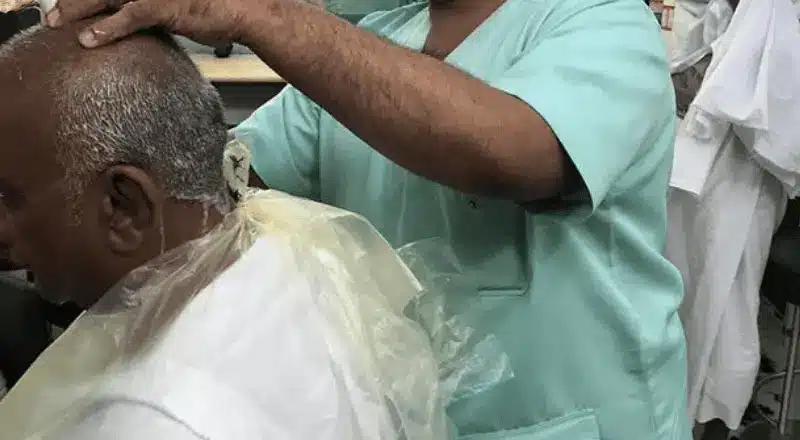
Tahallul is the final step of Umrah, the point where a pilgrim exits the state of Ihram after completing Tawaf and Sa’i. It’s a simple act on the surface, but Tahallul for men and women follows different rules, and getting them right matters for the pilgrimage to be considered complete.
What Tahallul Actually Means
Tahallul marks the release from the restrictions of Ihram that a pilgrim has observed since entering that state at the miqat. Once Tawaf and Sa’i are finished, cutting the hair signals that Umrah is complete and that the pilgrim may resume normal activities that were restricted during Ihram, from wearing regular clothing to other everyday actions that Ihram temporarily sets aside. It’s a small physical act carrying real symbolic weight, marking the formal close of the pilgrimage rather than just a haircut.
How Men Perform Tahallul
Men have two accepted options. Halq, shaving the head completely, is considered the more virtuous of the two and is what many scholars recommend for a first Umrah in particular. Taqsir, trimming the hair evenly across the head rather than shaving it fully, is also valid and often preferred by men who intend to perform Umrah again soon after, since regrowing a full head of hair takes longer than a light trim.
How Women Perform Tahallul
Women do not shave their heads under any circumstance. The correct method is trimming a small portion of hair, roughly the length of a fingertip, taken from the ends of the hair rather than the scalp. This is a light, symbolic trim rather than anything visible from a distance, and it should never be confused with the fuller cut expected of men.
Common Mistakes Worth Avoiding
A few missteps come up repeatedly among first-time pilgrims. Some men shave only a small patch rather than the full head, which doesn’t fulfill Halq properly. Some women mistakenly trim from multiple sections rather than a single small portion, which isn’t necessary and can look uneven. Taking a moment to understand the exact requirement beforehand avoids having to think it through under pressure at the end of Sa’i.
Getting the Timing Right
Tahallul comes only after both Tawaf and Sa’i are fully completed, not partway through either ritual. Performing it too early, before finishing Sa’i, means the pilgrim is technically still in Ihram, and the sequence needs to be corrected before Umrah can be considered valid. It’s worth confirming both rites are genuinely finished before reaching for scissors or a razor.
How to Perform Tahallul Step by Step
Knowing how to perform Tahallul correctly comes down to a short sequence: complete Tawaf, complete Sa’i, then cut the hair according to gender, men choosing between shaving or trimming, and women taking a small trim from the ends. Once this is done, Ihram restrictions are lifted and Umrah is complete.
Practical Tips for the Day
- Bring your own small scissors if traveling with a group; barbers near the Haram get extremely busy during peak season.
- Men choosing Halq should expect long lines at barber stalls; arriving early in the day avoids the worst of the wait.
- Women can trim their own hair privately; there’s no requirement to visit a salon or have it done by someone else.
- Keep a small pair of scissors in your bag, useful for women performing the trim themselves right after Sa’i.
A Small Act with Real Significance
Tahallul is brief, but it closes out a ritual that many pilgrims spend months preparing for. Understanding the difference between men’s and women’s requirements beforehand means it happens smoothly, without confusion or a rushed decision made in the moment at the end of Sa’i.
iLinkTours briefs every pilgrim on the full sequence of Umrah rites, including Tahallul, as part of its guided packages, so nothing gets missed or rushed at the final step.