Moving thirty or fifty people between an airport, two holy cities, and several hotels takes careful coordination. Good Umrah transportation planning for a large party is about timing, capacity, and communication, because a delay on one leg can ripple through the whole schedule.
Map Every Leg of the Journey
Start by listing each movement the group needs: airport to Makkah hotel, hotel to the Haram if walking is not possible, Makkah to Madinah, visits to historical sites, Madinah hotel to the airport, and the final departure. Having the full list lets you see where transport is essential and where walking will do.
Choose the Right Vehicles
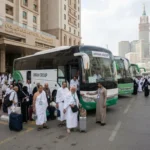
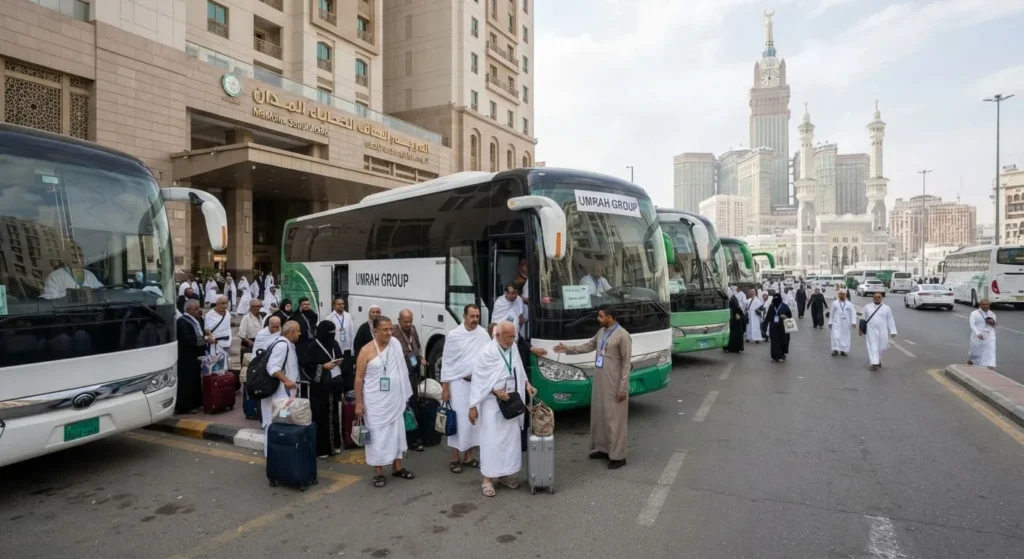
- Coaches: The standard choice for large groups, typically seating around forty to fifty.
- Smaller buses and vans: Useful for splitting a group or reaching tighter hotel streets.
- The Haramain train: A fast option between the two cities, with group tickets arranged in advance.
- Private cars: Good for elderly members or anyone with special needs.
Match Capacity to Luggage
Umrah groups carry a lot of luggage, including Ihram clothing, gifts and extra bags for the return. A coach that fits the passengers may not fit the suitcases, so confirm luggage space and whether a separate vehicle is needed. Counting bags at each stop avoids losses.
Plan Arrival Carefully
Reliable Umrah Group Transportation starts at the airport. If members arrive on different flights, coordinate pickups in waves, or ask the group to fly together where possible. Share arrival times and the meeting point with the driver and the group leader, and track flights for delays.
Build in Time Buffers
Large groups move slowly. Boarding, headcounts, and toilet breaks all take longer than expected, especially during Ramadan and school holidays when roads and arrival halls are busy. Add a generous buffer to every transfer, and avoid tight connections.
The Makkah to Madinah Transfer
The road journey takes roughly four to five hours, and a coach with a rest stop is a comfortable option for a group. Some groups travel overnight to save a day, while others prefer a daytime drive with breaks for prayer and food. The train offers a faster alternative where seats are available.
Ziyarat and Day Trips
Visits to historical sites in Makkah and Madinah are best done with a dedicated coach and a guide, with set start times and a clear route. Agreeing the timings in advance avoids long waits and keeps the group within the energy limits of older members.
Peak Season Transportation Planning
Around Ramadan and school holidays, coaches and drivers are in high demand, and prices rise. Reserve vehicles at the same time as flights and hotels, so the whole itinerary stays connected and you are not left looking for transport at the last minute.
Assign Roles
Every vehicle should have a named leader with a passenger list and a phone. Give each driver and leader the same itinerary and emergency contacts. Clear roles keep the group together and make it easy to account for everyone.
Think About Special Needs
Elderly pilgrims and people with limited mobility may need extra time, easy-entry vehicles or a private car. Ask about this at booking, so the right transport is available at each stop rather than arranged on the day.
Keep the Group Informed
Send the full transport schedule to every member before departure, including pickup times, vehicle numbers and the leader’s phone number. A group message thread helps with last-minute updates, and printed copies are useful for those less comfortable with phones.
Confirm Everything in Writing
Obtain written confirmation of vehicle types, pickup times, routes, and costs. Check what happens if a flight is delayed or a vehicle breaks down, and make sure you have contact numbers for every provider.
iLinkTours arranges transport for large Umrah groups across every stage of the trip, with confirmed vehicles, experienced drivers, and schedules built around your group.